Blog 1 — Signs Hidden Water Damage

8 Signs You Have Hidden Water Damage in Your Minneapolis Home
Quick Answer
Hidden water damage in a Minneapolis home typically shows up as musty odors, discolored or bubbling paint, soft drywall, warped floors, unexplained spikes in your water bill, or visible mold growth. In Minneapolis, the freeze-thaw cycle and clay soils create unique entry points that cause hidden damage for months before it becomes obvious.
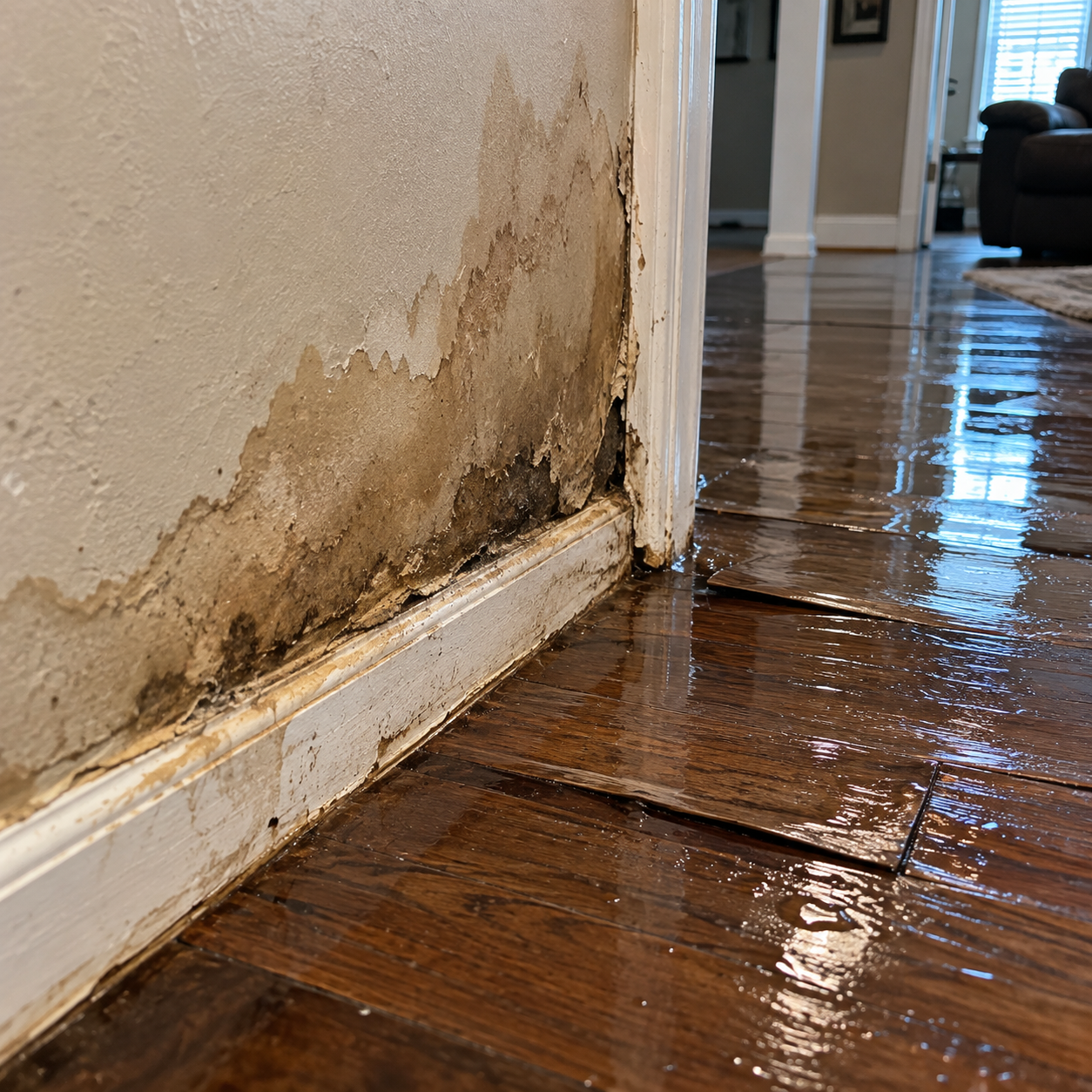
Hidden water damage is one of the more expensive problems a Minneapolis homeowner can face, partly because of how long it can go undetected. A small leak behind a wall or under a floor does not announce itself. It sits there, month after month, soaking insulation, rotting framing, and feeding mold colonies that you cannot see. By the time you notice something is wrong, the repair bill is often three to five times what it would have been if you had caught it early.
In Minneapolis, certain housing characteristics make hidden damage more common. Older homes in neighborhoods like Longfellow, Northeast, and Powderhorn have aging plumbing, original cast iron drain lines, and vintage plaster or drywall construction that can conceal moisture for a long time. The freeze-thaw cycle from November through March creates pipe vulnerabilities that cause slow leaks as pipes expand and contract. And the city’s clay soils mean foundation moisture pressure is high even without a major storm. Here are the eight signs to know.
1. A Musty or Earthy Odor That Will Not Go Away
Smell is often the first signal. If part of your home has a persistent musty or earthy smell that does not go away after cleaning, there is likely moisture somewhere. Mold produces microbial volatile organic compounds that create that characteristic odor, and those compounds can travel through wall cavities and floor systems before you see any visible growth. Pay extra attention to basements, crawl spaces, and areas near exterior walls. In Minneapolis, concrete block foundations in older homes are common sources of chronic moisture that produces exactly this kind of odor.
2. Discolored Patches on Ceilings or Walls
Yellow-brown staining on a ceiling or wall is almost always moisture-related. The stain forms as water moves through building materials and deposits minerals on the surface. One stain can represent a relatively small leak, but it can also indicate that water has been present long enough to saturate the material and wick outward from the source. Do not paint over a stain without investigating first. The discoloration comes back, and it usually comes back worse. Check for the corresponding water source above or behind the stain, whether that is a bathroom drain, a roof penetration, or an exterior wall assembly.
3. Paint or Wallpaper That Is Bubbling or Peeling
Paint bonds to drywall or plaster through adhesion. When moisture gets behind the surface, it breaks that bond. Bubbling, blistering, or peeling paint on interior walls or ceilings is a reliable indicator of moisture accumulation on the other side. Minneapolis homes that have had ice dams frequently show this pattern on the interior walls below roof overhangs where meltwater backed up under the shingles and seeped through the roof deck and into the wall assembly.
4. Soft, Spongy Drywall or Plaster
Press gently on any area of drywall or plaster that looks suspicious. Healthy drywall feels solid. Drywall that has absorbed moisture feels soft or gives slightly under light pressure. In extreme cases you can push a finger through it without much effort. This condition means the paper facing and gypsum core have been compromised by moisture, and there is a very high probability of mold growth on the back face of the panel where it sits against the wall cavity. Do not try to dry this with a space heater and hope for the best. Saturated drywall needs to be removed and replaced.
5. Warped, Buckling, or Soft Spots in Flooring
Wood and engineered wood flooring absorb moisture and swell. If you notice boards that have started to cup (edges higher than the center), crown (center higher than edges), or separate from adjacent boards, moisture is likely involved. Soft spots in hardwood floors can indicate subfloor deterioration from water that has been sitting underneath for a long time. In Minneapolis, this is particularly common in older bungalows and craftsman homes where original fir or pine subfloor has been exposed to moisture from below-grade moisture migration or plumbing leaks over decades.
6. An Unexplained Spike in Your Water Bill
If your water usage goes up without any change in behavior, something is running water you do not know about. A toilet flapper leak can waste 100 gallons a day. A pinhole leak in a supply line inside a wall can run continuously for months before it shows up on a surface. Compare consecutive monthly bills. If usage has jumped without explanation, turn off all water-using appliances and check whether your meter is still running. If it is, you have an active leak somewhere in your system.
7. Visible Mold Growth, Even in a Small Area
Any visible mold is a sign of a moisture problem, and visible mold almost always means there is more mold you cannot see. Mold grows where conditions are right: moisture, organic material, and temperatures above freezing. In Minneapolis, the combination of cold winters and humid summers creates conditions where mold can thrive inside wall cavities that cycle between warm and cold. If you see black, green, or white growth on a wall, in a corner, or along a baseboard, do not assume it is isolated. Get an inspection that goes beyond the surface. The EPA’s mold guidance for homeowners recommends professional assessment for any visible growth larger than 10 square feet.
8. Rust Stains Near Plumbing Fixtures or Drain Lines
Orange or reddish-brown rust staining around pipe penetrations, under sinks, around the base of a toilet, or along basement drain lines indicates long-term moisture contact with metal components. Cast iron drain lines, which are common in Minneapolis homes built before the 1960s, corrode from the inside over time and can develop slow seeps or pinhole failures that deposit rust-stained water on surrounding surfaces. If you see rust staining in areas that are not directly connected to a water outlet, it is worth tracing the line to find where the moisture is originating.
What to Do If You Notice Any of These Signs
Do not wait and watch. Every day of moisture contact increases the potential scope of water damage restoration work and increases mold risk. Call for a professional inspection. We use thermal imaging cameras and calibrated moisture meters to find water behind walls and under floors without opening anything unnecessarily. If there is a problem, we will find it and document exactly what needs to be done.
If mold is involved, the remediation process follows IICRC S520 standards and may require containment, negative air pressure, and air quality testing before the space is cleared. Learn more about what that involves on our mold remediation page.

Frequently Asked Questions
The most reliable method is a professional inspection using thermal imaging cameras and moisture meters. These tools detect temperature differentials and moisture levels that indicate water presence without opening walls unnecessarily. Visible signs include musty odors, paint discoloration, soft or warped surfaces, and unexplained increases in your water bill. In Minneapolis, areas near exterior walls and basements are particularly common locations for hidden moisture.
You can do a basic check with a consumer-grade moisture meter available at hardware stores, but these tools have significant limitations compared to professional equipment. Thermal imaging cameras used by restoration professionals can detect temperature differentials that indicate moisture behind finished surfaces in ways that contact meters cannot. For anything beyond surface-level assessment, a professional inspection is more reliable and typically free of charge.
Surface area of a stain does not reliably indicate how much moisture is behind it. A small stain can be the visible result of significant saturation in the wall or ceiling assembly behind it. The only way to know the full extent is to measure moisture levels in the affected materials, not just look at the stain. We have opened walls to find 12 inches of dry framing around what looked like a 6-inch ceiling stain, and we have found framing saturated 3 feet in either direction from a spot that looked minor.
Mold can begin to develop on wet organic materials like drywall paper, wood framing, and insulation within 24 to 48 hours of sustained moisture contact. In Minneapolis, basement and wall cavities that tend to be cooler and less ventilated can slow the process slightly, but not reliably. If moisture has been present for more than 48 hours, a mold assessment should be part of any water damage inspection.