
Mold Remediation Minneapolis Minnesota | Find It, Remove It, Keep It Gone
Professional mold inspection, containment, and removal for Minneapolis homes. IICRC-trained technicians. Insurance documentation included.
(507) 468-7883 – Call NowQuick Answer
Mold remediation in Minneapolis typically takes 1 to 5 days depending on the affected area and severity. Mold can begin developing within 24 to 48 hours after a water event when relative humidity exceeds 60 percent. Professional remediation includes containment, HEPA removal, antimicrobial treatment, and post-clearance testing to confirm the area is safe.
Mold remediation in Minneapolis, Minnesota requires understanding the specific conditions that make this climate so favorable for mold growth. High summer humidity combined with the moisture that builds up in poorly ventilated Minneapolis basements creates the exact environment mold thrives in. When water damage occurs and goes untreated, or when a slow leak hides inside a wall cavity for weeks, mold can take hold fast.
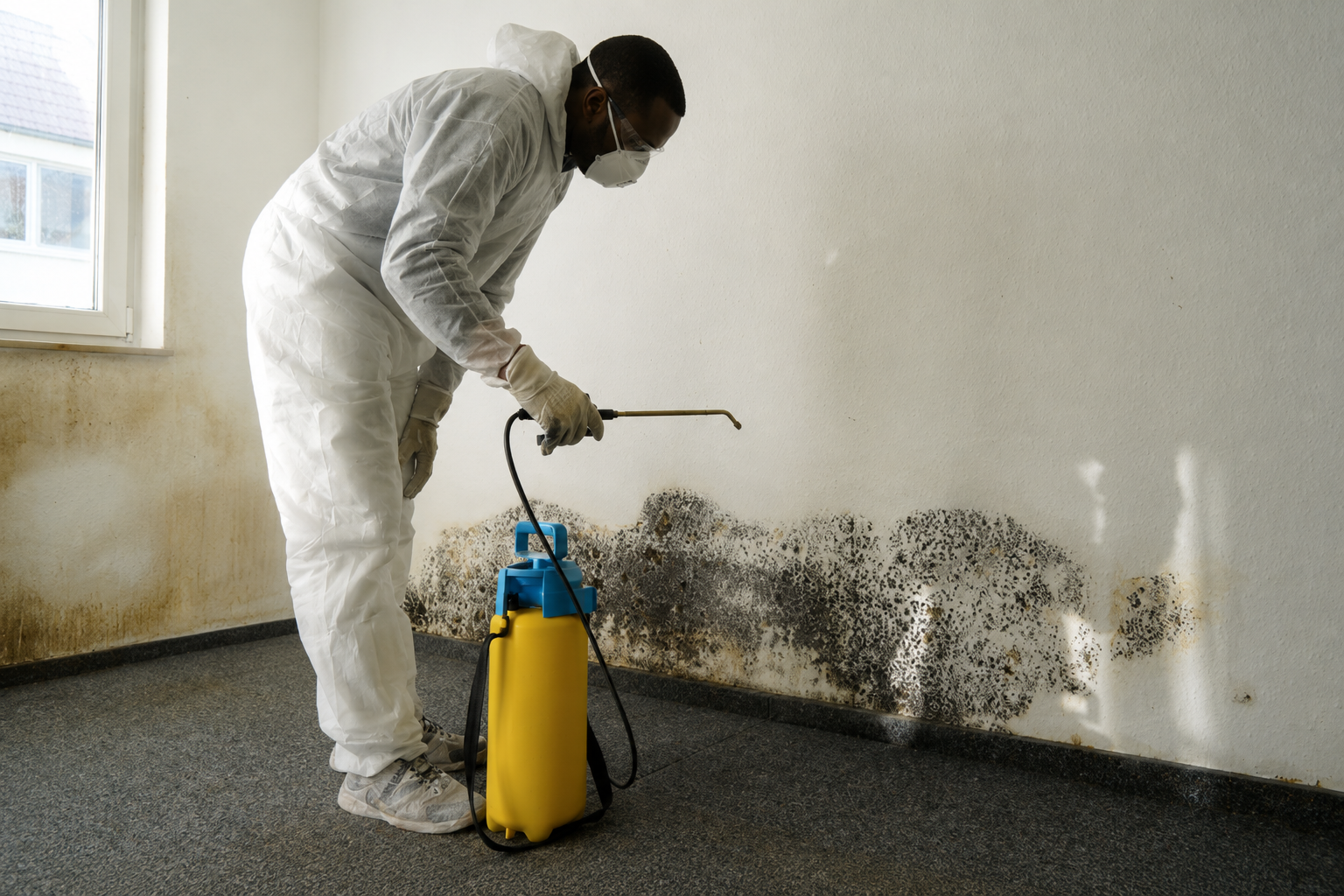
How Mold Develops: The Timeline
Mold does not announce itself. It starts invisibly and spreads through spore dispersal before you can see it. Here is what happens after a water event in a typical Minneapolis home.
- 0 to 24 hours: Water saturates drywall, insulation, and wood framing. Mold spores, which are always present in indoor air, begin settling on moist surfaces.
- 24 to 48 hours: Under the right humidity conditions, spore germination begins. You will not see it yet, but colonies are forming inside wall cavities and behind baseboards.
- 3 to 12 days: Visible mold growth appears. By this point the colony is established and releasing spores into the air. The musty odor most homeowners associate with mold becomes noticeable.
- 14 to 21 days: Mold colonies spread to adjacent materials. What started in one wall section is now in insulation, subfloor, and framing. Remediation cost increases significantly at this stage.
Why Minneapolis Climate Accelerates Mold
Minneapolis sits in USDA Plant Hardiness Zone 5a with average summer relative humidity levels above 70 percent. This matters because mold grows best between 77 and 86 degrees Fahrenheit with relative humidity above 60 percent. Minneapolis summers hit those conditions regularly.
Basements are a particular concern across the City of Lakes. Most Minneapolis single-family homes were built with full basements to meet the 42-inch frost depth requirement. Many of those basements, particularly in homes built before the 1980s, lack modern waterproofing membranes. Moisture wicks through poured concrete and block foundation walls, keeping humidity elevated even when there is no visible water intrusion. That chronic moisture sets the stage for mold before any acute water event ever occurs.
Health Risks of Indoor Mold
Mold exposure is a health concern for everyone in the home, and more acute for children, elderly residents, and anyone with respiratory conditions. Common symptoms of mold exposure include persistent coughing, nasal congestion, skin irritation, and aggravated asthma. Black mold species including Stachybotrys chartarum can produce mycotoxins associated with more serious respiratory illness. The EPA recommends that any visible mold larger than 10 square feet be remediated by professionals. See the EPA mold guidance at epa.gov/mold.
The Mold Remediation Process
We follow IICRC S520 Standard for Professional Mold Remediation on every job. The process is methodical, documented, and measurable.
Assessment and Air Testing
We identify visible mold, use moisture meters to find hidden wet areas, and take air samples to establish spore counts before work begins. This baseline is part of your remediation documentation.
Containment
Plastic sheeting and negative air pressure contain mold spores to the work area. We run HEPA-filtered negative air machines throughout the job to prevent spores from spreading to clean areas of your Minneapolis home.
Removal of Affected Materials
Porous materials that cannot be decontaminated, including drywall, insulation, carpet, and ceiling tiles, are removed and bagged for proper disposal. Non-porous surfaces are HEPA-vacuumed and cleaned.
Antimicrobial Treatment
All remaining surfaces in the affected area are treated with EPA-registered antimicrobial agents to inhibit regrowth. We treat beyond the visible boundary to account for spore migration.
Clearance Testing
Post-remediation air sampling confirms that spore counts are at or below outdoor baseline levels. We provide a clearance certificate with your job documentation.
Why DIY Mold Removal Fails
Bleach kills surface mold on non-porous materials. It does not penetrate drywall. Scrubbing visible mold without containment releases millions of spores into the air, spreading the colony to adjacent rooms. Consumer air purifiers do not run at the air volume needed to remove viable spores from a contaminated room. Mold always comes back without first addressing the moisture source, and most Minneapolis homeowners cannot locate hidden moisture without professional thermal imaging and moisture meters.
If your mold problem followed a water damage event, read our water damage restoration page for the full restoration process, or visit our flood cleanup page if external flooding was involved.
Frequently Asked Questions
Mold Remediation Service Area
We serve Minneapolis and all communities within 50 miles for professional mold remediation and testing.
Get a Free Mold Inspection
Describe what you have found and we will respond quickly. For urgent situations, call (507) 468-7883.