
Basement Water Damage Restoration Minneapolis MN | Below-Grade Flooding Experts
Minneapolis basements flood. Clay soils, a 42-inch frost line, and aging drainage systems make below-grade flooding one of the most common calls we get across the Twin Cities. We extract water, dry the structure, and restore your basement completely.
- Water extraction within 60 minutes of your call
- Below-grade drying protocols built for Minneapolis conditions
- Mold prevention within the 24 to 48 hour window
- Insurance claim documentation included at no extra charge
Get Help Now
Quick Answer
Minneapolis basements flood because the region’s heavy clay soils do not drain well, and aging sump systems fail during the spring thaw and summer storms. Most Twin Cities single-family homes have full basements due to the required 42-inch frost depth, making below-grade flooding one of the most common water damage calls we receive.
Why Minneapolis Basements Flood
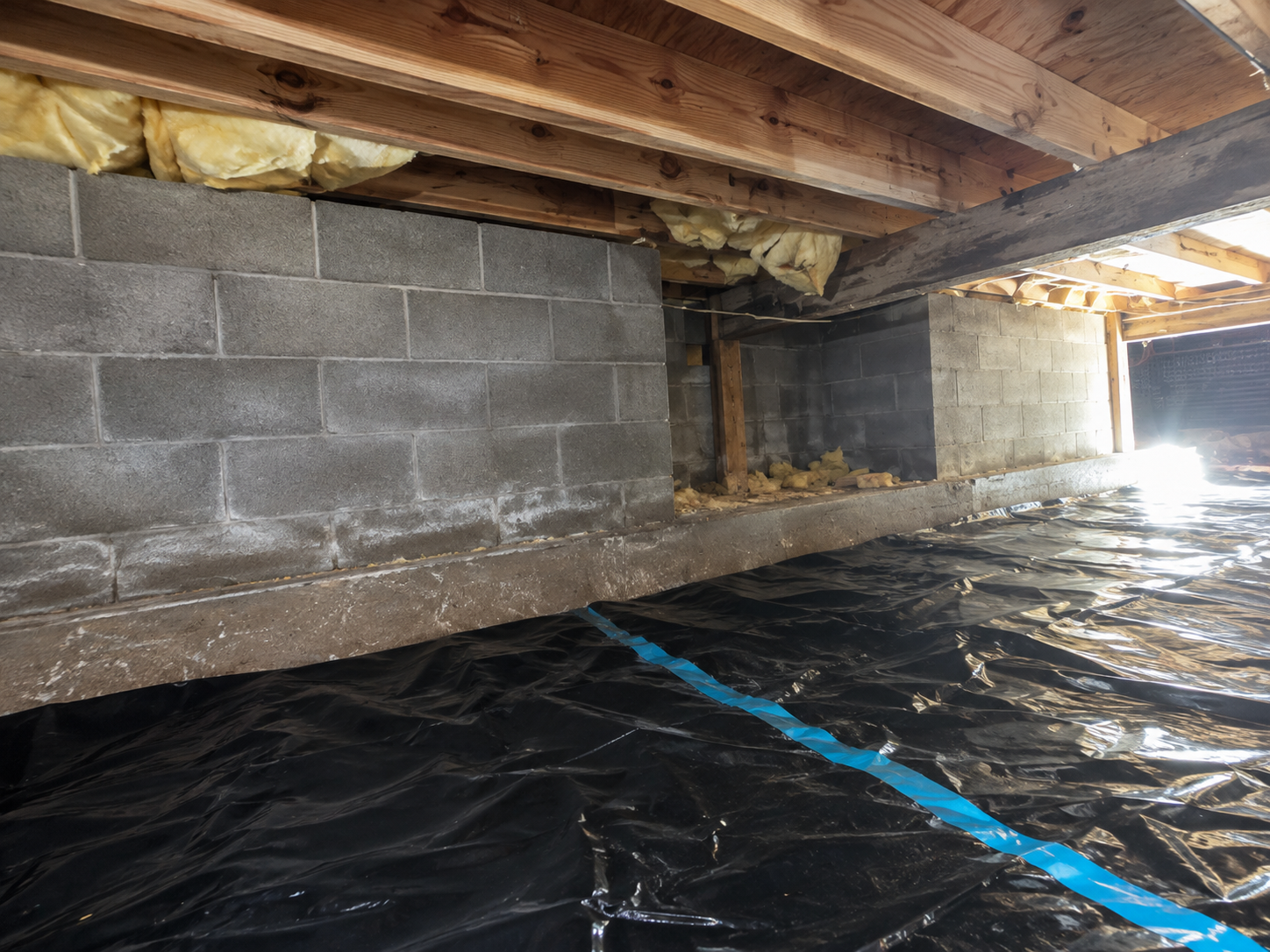
When people outside Minnesota ask why basements are so common here, the answer is simple: frost depth. Minnesota building codes require foundations and footings to reach at least 42 inches below grade across the Twin Cities metro. Builders already have to dig that deep, so extending the excavation to create a full basement adds relatively little cost and a lot of usable square footage. That is why the vast majority of Minneapolis single-family homes sit on full basements, finished or unfinished.
But that same depth creates a below-grade living area that is surrounded by soil on three or four sides. Minneapolis soils are predominantly clay-heavy, especially in the older neighborhoods that stretch from Northeast Minneapolis through South Minneapolis into the first-ring suburbs. Clay does not drain. It holds water against foundation walls and forces it to find the path of least resistance, which is often your basement floor drain, your sump pit, or the cracks in your concrete block walls.
Add in these common failure points and basement flooding becomes predictable:
- Sump pump failure during power outages from thunderstorms
- Backup of municipal storm sewers during high-volume rain events
- Lateral seepage through aging concrete block or poured foundation walls
- Window well overflow from snowmelt or heavy rain
- Failed floor drain backflow valves
- Hydrostatic pressure buildup after hard freeze and rapid spring thaw
- Sewer line backup from roots or capacity overload
We have responded to all of these situations across Minneapolis neighborhoods. The restoration process starts the same way every time: get the water out fast, assess what got wet and how wet, then dry the structure completely before mold takes hold.
What Makes Below-Grade Restoration Different
Basement water damage is not simply water damage that happens to be downstairs. Below-grade spaces present specific challenges that require different equipment and different protocols than above-grade restoration.
Airflow is the first challenge. Basements are enclosed. Humid air does not move freely the way it does in a living room or kitchen. We use commercial desiccant dehumidifiers and axial fans positioned to create positive airflow through the space, pulling moisture out through the structure and into our equipment rather than letting it migrate deeper into walls and framing.
Concrete and block are the second challenge. Finished basements often have framing, drywall, and flooring installed against concrete or block walls. When those assemblies get wet, the porous masonry holds moisture even after the air feels dry. Our moisture meters read beneath the surface. We do not sign off on a dry basement until the readings confirm that the substrate is at acceptable levels, not just the surface.
Contamination is the third challenge. Basement flooding often involves sewer backup or storm drain overflow, both of which introduce Category 3 black water to the space. That changes the entire scope of the job. Affected materials cannot simply be dried. They have to be removed, bagged, and disposed of according to proper protocols. The space then requires antimicrobial treatment before any reconstruction begins. If your basement flooded from a sewer backup or a backed-up storm drain, do not enter the space without protection. Call us first.
The Basement Water Damage Restoration Process
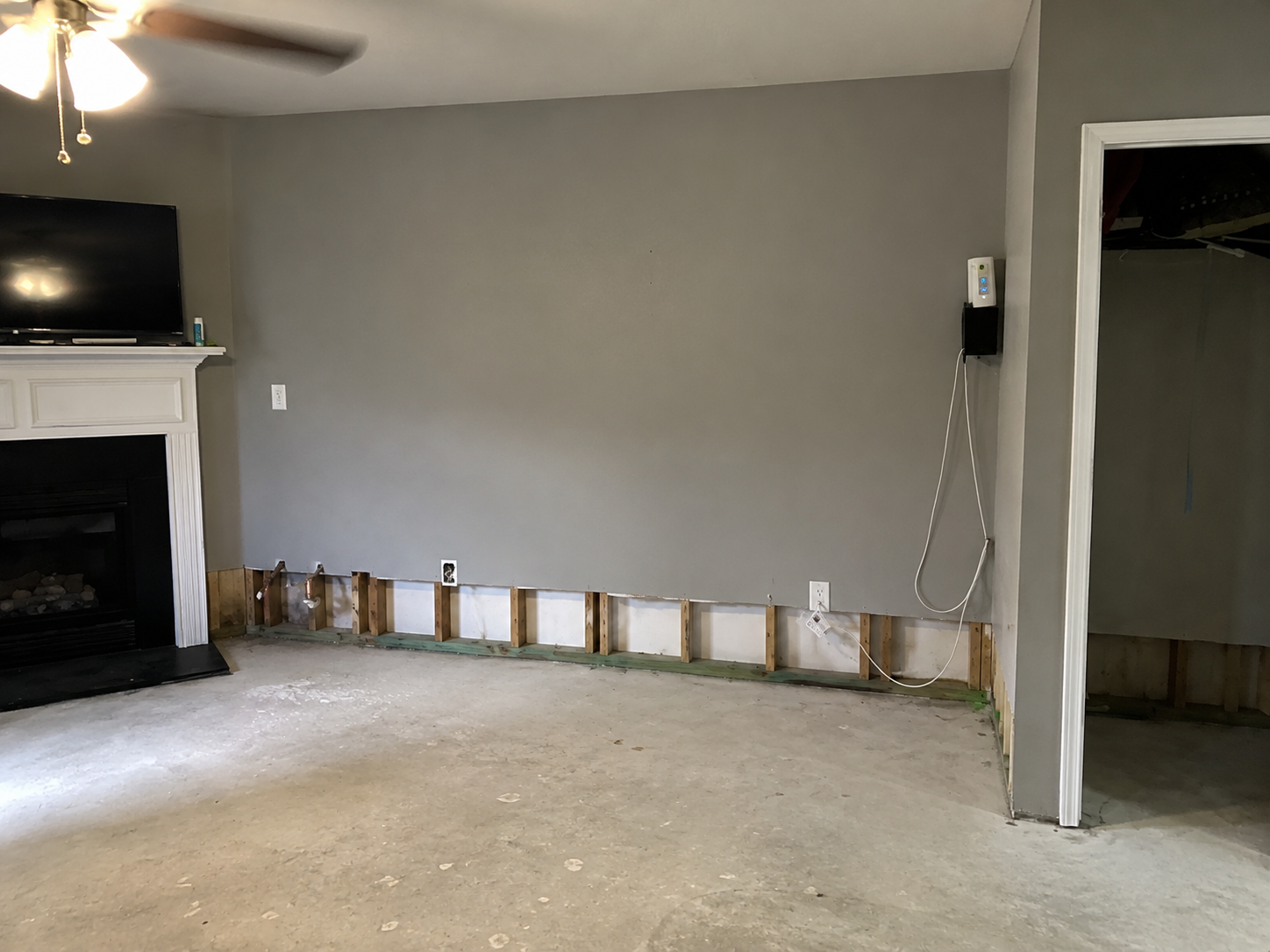
We arrive with truck-mounted extraction units capable of removing hundreds of gallons quickly. Standing water is extracted first. Then we remove saturated materials including carpet, pad, and any drywall that is unsalvageable.
Before drying begins, we identify the water source. If the sump pump failed, we confirm it is working or removed from service. If there is a crack or point of entry in the foundation, we document it for repair. Drying a basement with an active water source is wasted effort.
We use thermal imaging cameras and calibrated moisture meters to map every wet surface including walls, floor slab, framing, and any stored items. This map becomes the baseline against which we track drying progress and document the scope for your insurance claim.
We place desiccant dehumidifiers, air movers, and where needed, injectidry systems to dry wall cavities without opening them. We monitor readings daily and adjust equipment placement based on the drying curve.
Mold can begin to develop on wet organic materials within 24 to 48 hours. We apply antimicrobial treatment to all affected surfaces as part of the drying phase, not as an afterthought. Basements with limited airflow are at elevated risk.
When moisture readings confirm the structure has returned to acceptable dry standard levels, we provide a final moisture report. This documentation goes to your insurance adjuster as proof of completed remediation and supports any reconstruction estimate.
Mold Risk in Minneapolis Basements
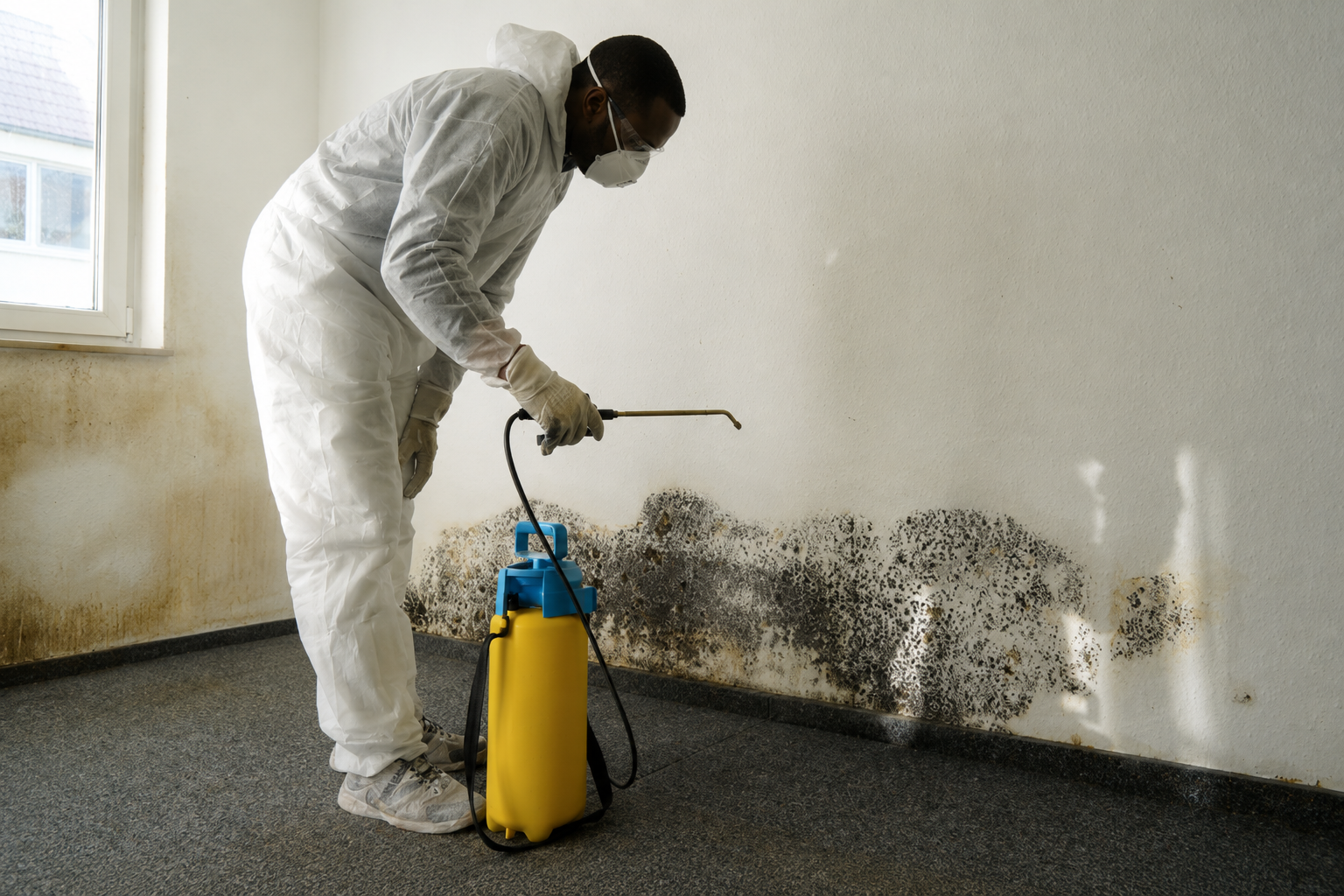
Mold is not a worst-case scenario in a flooded Minneapolis basement. It is the default outcome if drying does not begin within 24 to 48 hours. Minneapolis basement air tends to be humid even before a flood event. When you add standing water to a naturally cool, enclosed, low-airflow environment with exposed wood framing and drywall, mold development is almost guaranteed without immediate intervention.
The materials most at risk are paper-faced drywall, wood framing, carpet backing, insulation, and stored items with porous surfaces. Mold on these materials does not wait for visible growth before it starts affecting air quality. Spores become airborne long before you can see colonies forming on surfaces.
Our drying protocol is built around the mold clock. Every hour matters. That is why we do not wait until business hours to respond to basement flooding calls. If you are reading this at 2 a.m. with water in your basement, call us now. The cost of calling tonight is far lower than the cost of a full mold remediation job in a few weeks.
Insurance Coverage for Basement Flooding in Minnesota
Coverage depends on the source of the water, and the distinctions matter significantly.
- Sudden and accidental discharge (burst pipe, appliance failure, water heater rupture): Typically covered under standard homeowners insurance, including resulting basement damage.
- Sewer or drain backup: Usually excluded from standard policies unless you have added a sewer backup endorsement. This is a separate rider many Minneapolis homeowners purchase given the age of the sewer infrastructure in neighborhoods like Northeast, Longfellow, and Nokomis.
- Surface flooding from storm runoff or overland flow: Not covered by homeowners insurance. Requires a separate flood insurance policy through the National Flood Insurance Program or a private carrier.
- Gradual seepage through foundation walls: Generally excluded as a maintenance issue, though this varies by policy and carrier.
We document the source of water entry as part of every job. Accurate source documentation is what allows your adjuster to properly classify the claim and avoid a flat denial. We have worked with virtually every major carrier operating in Minnesota and know what documentation each one requires. See our flood cleanup page for more on insurance documentation for larger water events.
Basement Flooding in Minneapolis Neighborhoods
Certain neighborhoods and housing types flood at higher rates than others. Older homes in areas like Longfellow, Powderhorn, Standish, and Seward were built on concrete block foundations rather than poured concrete. Block foundations develop cracks over decades and allow lateral water entry during sustained rain events. Neighborhoods near Minnehaha Creek and Nine Mile Creek also see elevated basement flooding rates from high water table during snowmelt and heavy rain. We know these neighborhoods and the specific failure patterns that come with each type of housing stock.
Request Basement Flooding Help Now
Fill out the form below and we will call you back within minutes.
Frequently Asked Questions
A failing sump pump is often a symptom, not the root cause. In Minneapolis, persistent basement flooding commonly points to lateral foundation wall seepage, inadequate exterior grading that directs water toward the foundation, or a high water table during spring thaw and heavy rain events. A sump pump replacement keeps you dry during normal conditions but may not address structural entry points. We assess the full picture before recommending a solution.
Most residential basement drying jobs in the Minneapolis area take 3 to 5 days with commercial-grade equipment in place. Finished basements with drywall, insulation, and flooring take longer than unfinished spaces because there are more materials to dry and more potential for moisture to hide in wall assemblies. We monitor readings daily and provide updated timelines as drying progresses.
It depends on the cause. Sudden and accidental water events such as a burst pipe or appliance failure are typically covered. Sewer backup requires a separate endorsement that many Minnesota homeowners carry given the age of local infrastructure. Overland flooding from storm runoff is not covered by homeowners insurance and requires flood insurance through the National Flood Insurance Program. The source of the water determines coverage.
Use caution. If there is any possibility that electrical outlets, panels, or appliances are in contact with standing water, do not enter until the power to that area has been confirmed off at the breaker. If the flooding is from a sewer backup or storm drain overflow, the water may be contaminated with bacteria and should be treated as a biohazard. In those cases, wait for our crew to arrive with proper protective equipment before re-entering the space.
Basement Water Damage Restoration Across the Minneapolis Metro
We serve Minneapolis and all communities within a 50-mile radius, including: